Close Menu
Ẩm Thực Hiện Đại
    Facebook Instagram YouTube Threads
    Facebook Instagram YouTube Threads
    Ẩm Thực Hiện Đại
    • TRANG CHỦ
    • VIỆT NAM
      1. Đánh giá nhà hàng
      2. Danh sách nổi bật
      3. Phỏng vấn
      4. View All

      Etēsia • kitchen counter + wines: Đánh giá độc lập

      September 24, 2026

      Fairmont Pool Terrace & Bar – Điểm hẹn Rooftop sang trọng mới nhất tại Hà Nội

      September 15, 2026

      Ushino Kura – trải nghiệm bò Nhật A5 thượng hạng

      September 9, 2026

      Samwonjung – Ẩm thực Hàn Quốc cao cấp tại Hà Nội

      September 3, 2026

      Ăn gì ở Ninh Bình: Những nhà hàng địa phương đáng thử

      September 26, 2025

      Top quán bar ưa thích tại Đà Nẵng (chia theo hạng mục)

      July 23, 2025

      Những quán cà phê đặc sản nổi bật tại Đà Nẵng

      April 12, 2025

      Những nhà hàng kiểu Âu đáng thử tại Đà Nẵng

      April 7, 2025

      Nghệ thuật kết hợp rượu vang và món Việt: Lời khuyên từ một chuyên gia

      November 6, 2024

      Trò chuyện cùng LABTORY – Nhà bia thủ công đậm chất Việt

      September 19, 2024

      Trò chuyện cùng Maison Béjo về nghề phô mai thủ công tại Việt Nam

      April 21, 2023

      Etēsia • kitchen counter + wines: Đánh giá độc lập

      September 24, 2026

      Fairmont Pool Terrace & Bar – Điểm hẹn Rooftop sang trọng mới nhất tại Hà Nội

      September 15, 2026

      Ushino Kura – trải nghiệm bò Nhật A5 thượng hạng

      September 9, 2026

      Samwonjung – Ẩm thực Hàn Quốc cao cấp tại Hà Nội

      September 3, 2026
    • THẾ GIỚI
      1. Châu Á
      2. Châu Âu
      3. View All

      Du lịch CHIANG MAI 2026: Đi đâu, Xem gì

      August 9, 2026

      Ăn gì ở CHIANG MAI: Các đặc sản địa phương phải thử

      July 28, 2026

      Những quán bar nổi tiếng nhất CHIANG MAI

      May 27, 2026

      Đi đâu, Xem gì tại BANGKOK 2026

      May 19, 2026

      Ris de Veau – Đặc sản ẩm thực Pháp truyền thống & nơi đáng thử

      August 30, 2026

      Trải nghiệm ẩm thực Michelin tại Thung Lũng LOIRE – Pháp

      August 21, 2026

      Ăn gì ở PARIS – Tổng hợp nhà hàng chúng tôi ưa thích

      December 25, 2025

      PARIS có an toàn không? Tất cả những gì cần biết

      December 7, 2025

      Ris de Veau – Đặc sản ẩm thực Pháp truyền thống & nơi đáng thử

      August 30, 2026

      Trải nghiệm ẩm thực Michelin tại Thung Lũng LOIRE – Pháp

      August 21, 2026

      Du lịch CHIANG MAI 2026: Đi đâu, Xem gì

      August 9, 2026

      Ăn gì ở CHIANG MAI: Các đặc sản địa phương phải thử

      July 28, 2026
    • KIẾN THỨC

      Kĩ năng kiểm tra đánh giá GOOGLE quan trọng cần biết

      May 30, 2026

      Vang tự nhiên thực chất là gì, có ngon bằng vang truyền thống?

      May 8, 2025

      Nghệ thuật kết hợp rượu vang và món Việt: Lời khuyên từ một chuyên gia

      November 6, 2024

      Bắt đầu tìm hiểu rượu vang từ đâu: Hướng dẫn của một Sommelier

      October 30, 2024

      Vì sao vang BORDEAUX nổi tiếng đến vậy?

      August 31, 2024
    • BLOG – GÓC NHÌN

      PARIS có an toàn không? Tất cả những gì cần biết

      December 7, 2025

      Sự thật thú vị về hai “Nàng tiên cá” nổi tiếng của COPENHAGEN

      September 21, 2025

      Tản mạn Hội An – Lịch trình một ngày hoàn hảo

      August 14, 2025

      PARIS: Những lầm tưởng, định kiến và quan ngại phổ biến

      November 23, 2024

      Michelin Việt Nam 2024 – Những gì được và chưa được?

      July 24, 2024
    • LIÊN HỆ
      • Về Ẩm Thực Hiện Đại
      • Mẫu thư liên hệ
    • Languages
    Ẩm Thực Hiện Đại
    Home»KNOWLEDGE»6 interesting facts about coffee in Vietnam you did not know
    KNOWLEDGE

    6 interesting facts about coffee in Vietnam you did not know

    Loïc MullerBy Loïc MullerFebruary 11, 2024Updated:March 26, 20246 Mins Read
    Share
    Facebook Twitter LinkedIn Pinterest Email

    At amthuchiendai.vn, we not only drink wine and beer, but we also enjoy coffee, which happens to benefit our health.

    We are not alone in appreciating this drink.

    Every day, 2.6 billion cups of coffee are consumed around the world, making it, along with tea, one of the most consumed beverages globally. Vietnam is no exception, and its coffee culture has many unique aspects.

    We recently began a journey to better understand this drink and its culture in the country. We believe that the more you know about something, the more you can appreciate it.
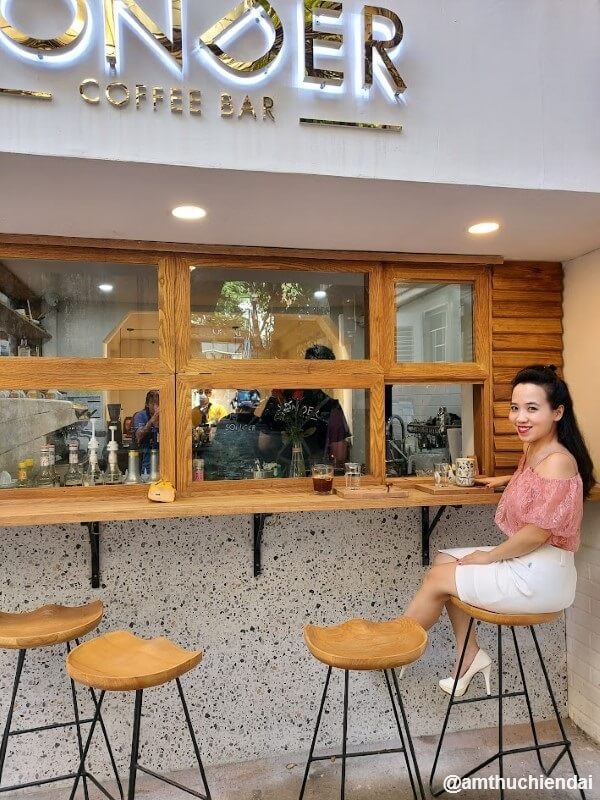
    A trendy coffee in Hanoi
    A trendy coffee in Hanoi

    Below 6 facts about coffee and Vietnam we recently learned :

    1. Vietnamese consume 2 kg of coffee per person annually, far less than the world’s biggest consumer, Finland.

    Walking the streets of Vietnam, you may get the impression that Vietnamese are significant coffee drinkers. This is true – coffee is an integral part of Vietnamese culture.
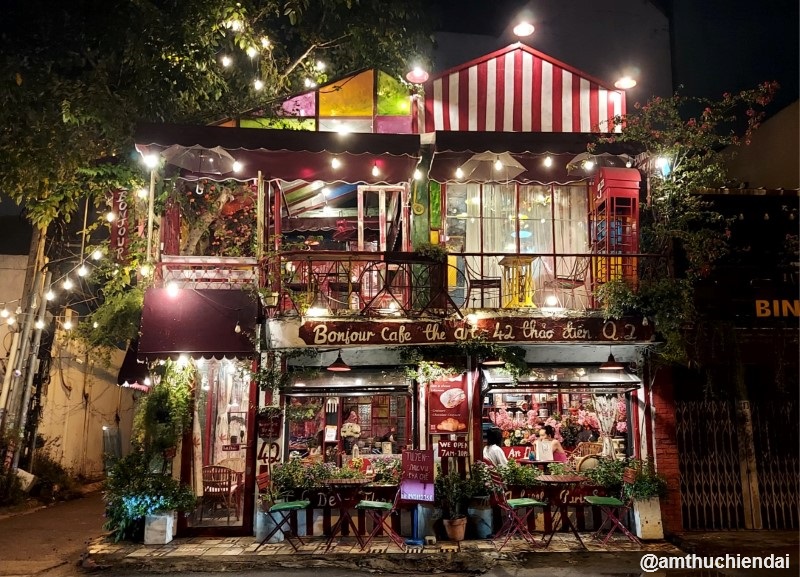
    Coffee House in HCMC (District 2)
    A coffee house in HCMC (District 2)

    However, in terms of sheer quantity consumed, Vietnam lags far behind most European nations, specifically Nordic countries, such as Finland. The country leads global coffee consumption with 12 kg per capita yearly.

    Here are the top 5 highest consumption nations according to data from the National Coffee Association :

    Country Consumption Per Capita
    1. Finland 12kg
    2. Norway 9.9kg
    3. Iceland 9.0kg
    4. Denmark 8.7kg
    5. Netherlands 8.4kg

    Vietnam’s per capita consumption stands at only 2kg per person annually, which significantly lags not just European nations but other major coffee-producing countries.

    Brazil, for example, consumes 5.8 kg per inhabitant yearly.

    This sizable gap versus global averages prompts experts to forecast strong local consumption growth of 5-10% annually for Vietnam in the coming years.

    2. Vietnam is the second largest coffee producer globally
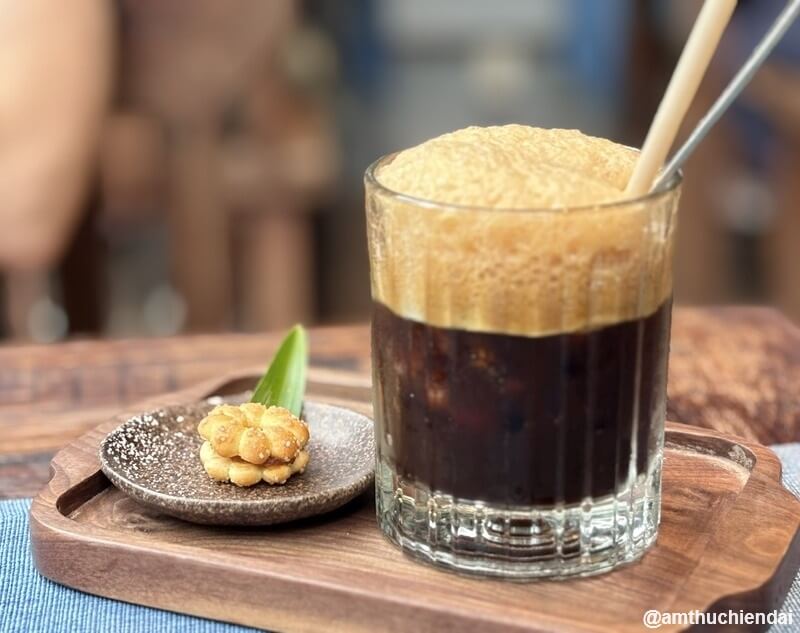
    A Cup of Vietnamese Coffee
    A Cup of Vietnamese Coffee

    Although Vietnam may not rank among the world’s top coffee consumers, it stands as one of the largest producers, second only to Brazil.

    This prominent position was achieved following a significant surge after Đổi Mới, the start of Vietnam’s economic liberalization. This shift, marking a departure from years of a planned economy, provided the necessary incentives for farmers to boost their coffee production.

    Rank Country 60 kilogram bags Metric tons
    1 Brazil 44,200,000 2,652,000
    2 Vietnam 27,500,000 1,650,000
    3 Colombia 13,500,000 810,000
    4 Indonesia 11,000,000 660,000
    5 Honduras 9,600,000 580,000

    It’s important to note that this boom in Vietnam’s coffee production was not without its challenges.

    • In the early stages, local producers grappled with the volatility of international market prices. This instability was so severe that nearly half of the 127 local coffee export companies stopped trading operations in 2013-2014 due to bad debts.
    • Additionally, the rapid expansion of intensive coffee farming brought significant environmental costs, including deforestation and soil pollution.
    • The industry’s growth also intensified conflicts with ethnic minorities in the central highlands, as the land’s value surged.

    Today, Vietnamese coffee producers are increasingly pushed by the authorities to focus on quality and sustainability.

    3. Arabica coffee dominates globally, but this isn’t the case in Vietnam

    An important aspect of Vietnamese coffee production is its focus on Robusta, which constitutes over 95% of its output. This contrasts sharply with the worldwide popularity of Arabica.
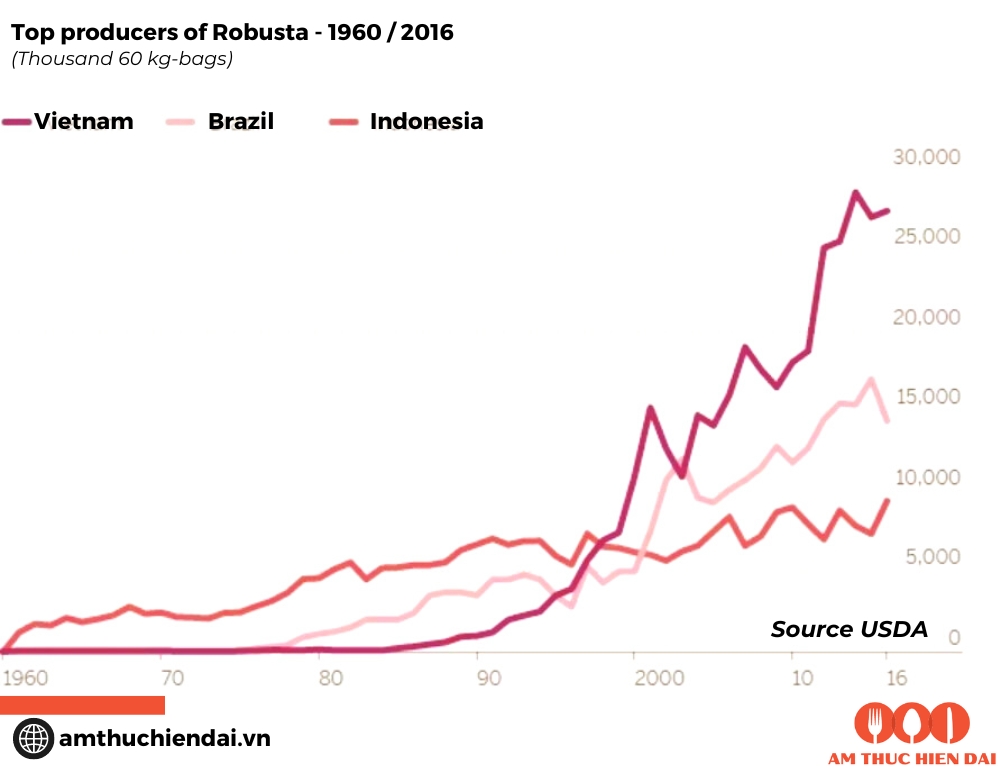
    Top producers of Robusta - 1960 / 2016

    For those unfamiliar with the differences between Arabica and Robusta:

    • Arabica requires higher altitudes (around 800 meters) for cultivation and is known for its milder, more balanced flavor. It commands higher prices on the international market.
    • Robusta, in contrast, is easier to cultivate, less expensive, and yields a full-bodied coffee with a distinctive earthy taste, though it tends to be more bitter. It also contains up to twice the caffeine content of Arabica. In exports, Robusta is often used in instant coffee or in blends (a common mix for espresso brands is 80% Arabica and 20% Robusta).

    Vietnam, as the world’s leading Robusta producer, is being encouraged by experts to diversify and integrate its production more, in response to shifting market demands.

    The USA, one of Vietnam’s main export destinations, is increasingly importing processed coffee and Arabica beans.

    This shift has impacted Vietnam’s coffee exports: Robusta bean exports to the US fell from 130,200 tonnes in 2018 to 90,500 tonnes in 2023, a decline of 27 percent.

    4. Fake Coffee in Vietnam is more widespread than you might think

    This issue significantly impacts the reputation of Vietnamese coffee. Often, this ‘fake coffee’ is made from overly-roasted soybeans and corn, artificially flavored and colored with various chemicals.

    It’s challenging for us to determine the full extent of this problem, but arrests made by authorities in connection with this issue are frequently reported in the news.

    The most concerning statistic we found in our research was from a 2016 survey conducted by the Vietnam Standard and Consumers Association (Vinastas). This survey revealed that approximately 30% of coffee beverages (from a total of 253 samples tested) in four regions of the country contained only a negligible amount of caffeine.

    Given that these coffees were not sold as decaffeinated, which is uncommon and expensive in Vietnam, it strongly suggests that these drinks were partially or entirely composed of counterfeit coffee.

    5. Coffee was introduced in Vietnam at the end of the XIX century by the French
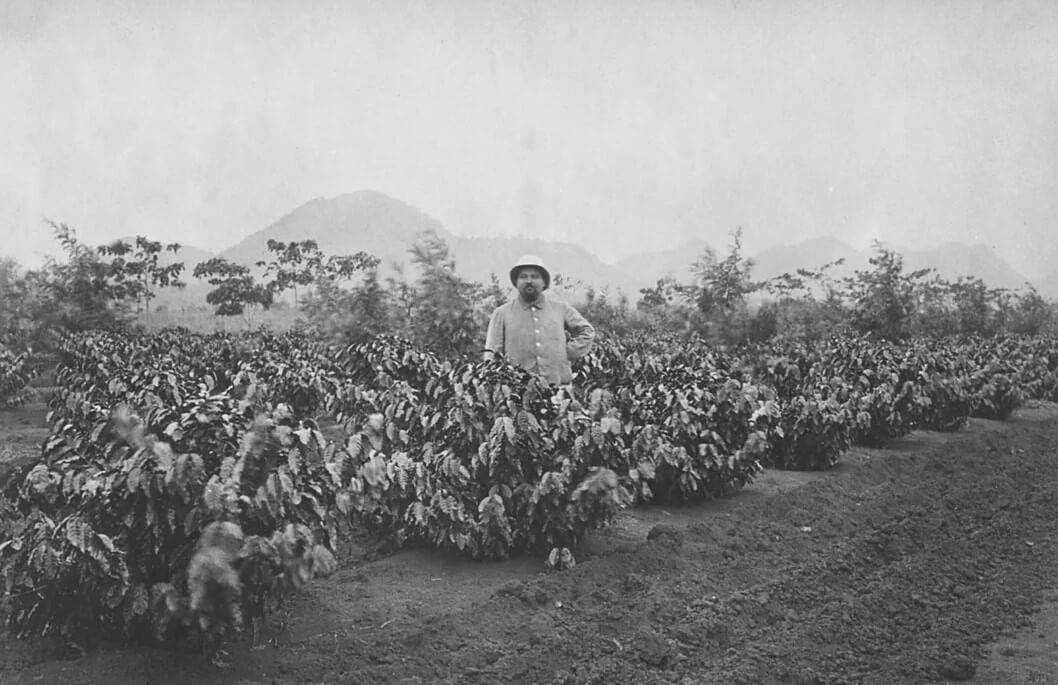
    French Coffee Plantation
    French Coffee Plantation Ninh Binh – Source BNF

    Compared to tea, coffee’s history in Vietnam, and Asia as a whole, is relatively brief.

    The discovery of coffee is traced back to Ethiopian shepherds in the 9th century. Initially, the coffee trade was tightly controlled by the Arabs. However, in 1616, Dutch merchants managed to smuggle coffee plants out, leading to its cultivation in Indonesia – marking the first coffee cultivation in Asia.

    As for Vietnam, it is believed that French missionaries first brought the coffee plant to the country in 1857.

    The first significant coffee plantations were established in 1888 in the Ninh Bình and Quảng Bình provinces. Notably, these early plantations primarily cultivated the Arabica variety of coffee.

    6. The Iconic Cà phê trứng was invented by a Sofitel Metropole Barista in the 1940s

    Vietnam boasts various methods of preparing and serving coffee, with the most iconic being Ca Phe Trung, a Hanoi specialty made with egg yolks.
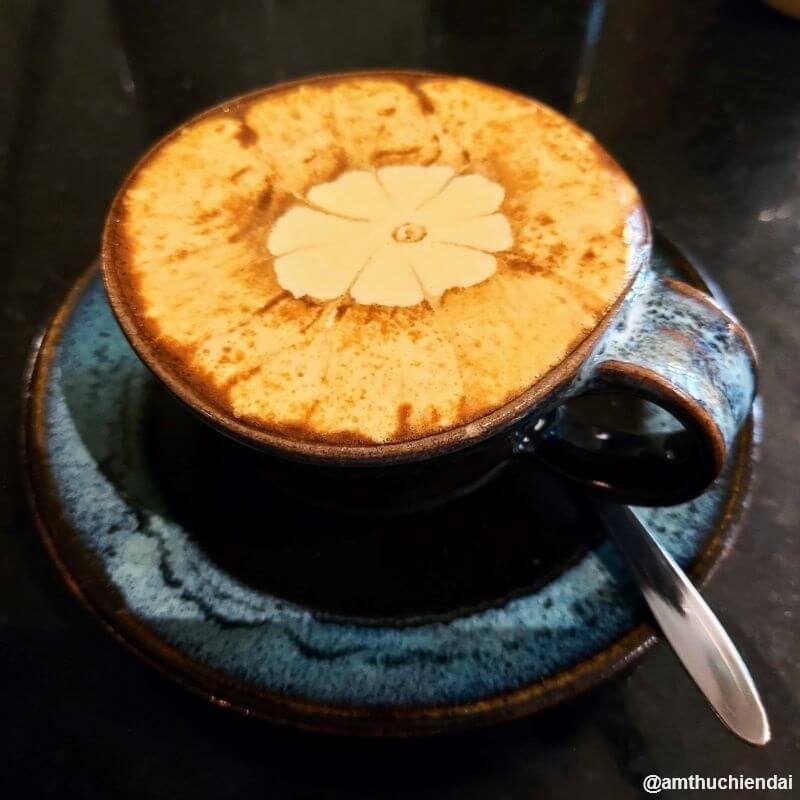
    Loading T cà phê trứng
    Cà phê trứng at Loading T

    This unique drink traces its origins to Mr. Nguyen Van Giang, a former barista at the renowned French Sofitel Legend Metropole Hotel in the 1940s. Inspired by Western creamy drinks like cappuccinos and lattes, he aimed to create a Vietnamese variant at a more affordable price, making it accessible to people from all social classes.

    During a time when dairy products were scarce and costly, Mr. Giang innovated by using whipped egg yolks to mimic the creamy texture of milk.

    He later embarked on his own venture, founding Cafe Giang, an establishment that continues to serve this iconic beverage today.


    Share. Facebook Twitter Pinterest LinkedIn Tumblr Email
    Previous ArticleTop bar – club nổi tiếng nhất Kuala Lumpur
    Next Article Đi đâu, xem gì tại Di sản UNESCO George Town, Penang
    Avatar photo
    Loïc Muller

    Là một người Pháp sinh sống tại Việt Nam 15 năm, Loïc có một niềm đam mê bất tận với bia thủ công, pizza và bánh đa cua. Anh mang tới cho Ẩm Thực Hiện Đại không chỉ kinh nghiệm nhiều năm trong việc xây dựng content website, mà còn cả góc nhìn của người nước ngoài về một đất nước Việt Nam không ngừng đổi mới và phát triển.

    Related Posts

    15 Dishes you should try in France by a French

    January 31, 2025

    A History of Beer in Vietnam – Part 5: Đổi Mới—The Golden Opportunity for Multinational Firms

    January 8, 2025

    A History of Beer in Vietnam – Part 4 : Brewing in a Socialist Economy

    January 3, 2025
    Leave A Reply Cancel Reply

    About Us
    About Us

    Chúng tôi là Loic và Quỳnh Hương - cặp đôi đam mê ẩm thực và xê dịch. Mục tiêu của chúng tôi là khám phá thế giới và chia sẻ kiến thức!

    About Us
    About Us

    We are Loic and Quynh Huong - a French-Vietnamese couple passionate about food and its culture. We share a passion for the creativity, diversity, and traditions surrounding cuisine in Vietnam and around the world.


    Description of Image

    Tiếng ViệtẨm Thực Hiện ĐạiĐọc bằng Tiếng Việt →
    Where to stay in Hanoi - best hotels🏨 Hotel GuideWhere to stay in Hanoi?My independent guide, tested by my guests →

    Giới thiệu chung
    Giới thiệu chung

    Ra đời vào năm 2022, Ẩm Thực Hiện Đại là một tạp chí điện tử dành cho những người Việt đam mê ẩm thực đương đại, coi đó không chỉ đơn giản là ăn uống mà còn là sở thích, văn hóa, nghệ thuật.

    Mỗi cộng đồng, mỗi nền văn hóa đều có những bản sắc riêng, nơi di sản ẩm thực là một phần không thể thiếu.

    Mục tiêu của Ẩm Thực Hiện Đại là giới thiệu đến bạn đọc bức tranh ẩm thực sôi động đang ngày càng phát triển mạnh mẽ tại Việt Nam, cũng như chia sẻ kiến thức liên quan đến các nền văn hóa ẩm thực đa dạng trên thế giới.

    Who are we?
    Who are we?

    Launched in 2022, Ẩm Thực Hiện Đại is an online magazine celebrating Vietnam's thriving contemporary food culture.

    Our coverage showcases the vibrant dining scenes in Vietnam's cities, from Hanoi to Ho Chi Minh City. We feature restaurant reviews, chef interviews, and the latest food trends emerging across the country.

    At Ẩm Thực Hiện Đại, we believe understanding enhances enjoyment. That's why we also provide in-depth coverage of food & gastronomy history, culinary techniques and more.

    Content


    ABOUT US
    📝Contact us

    CITIES
    ⛩️ Hà Nội
    🌊 Đà Nẵng
    🏙️ Ho Chi Minh City

    Maps
    Hà Nội
    Da Nang

    NỘI DUNG

    Việt Nam
    ⛩️ Hà Nội & miền Bắc
    🌊 Đà Nẵng
    🏙️ TP. Hồ Chí Minh

    Châu Á
    🇹🇭 Thái Lan
    🇲🇾 Malaysia

    Châu Âu
    🇫🇷 Pháp
    🇮🇹 Ý

    Kiến Thức
    🍷 Rượu vang
    🍸 Cocktail

    Follow Us
    • Facebook
    • Instagram
    • YouTube
    • Threads
    Về chúng tôi


    👫Về Ẩm Thực Hiện Đại
    📝 Liên hệ

    Facebook Instagram YouTube Threads
    Copyright @ Ẩm Thực Hiện Đại - 2024
    • THẾ GIỚI
    • VIỆT NAM
    • CÔNG THỨC CHẾ BIẾN
    • KIẾN THỨC
    • BLOG – GÓC NHÌN

    Type above and press Enter to search. Press Esc to cancel.