


I am so happy to see that food is one of the first things people visiting Hanoi want to experience. I think it’s one of the best ways to discover the city and its culture in all its complexity.
The cuisine is excellent, of course, and truly different from what you would find in the South, let alone abroad.
The thing is, I do think many people who arrive in Hanoi with big “food plans” still make a lot of mistakes. I blame social media for that. On TikTok and Instagram, most recommendations are made by tourist content creators who discover places through the same kind of people, creating a very narrow self-reinforcing loop.
I have been living in Hanoi for nearly 20 years now, and I have often been asked to share my recommendations on the matter, so here’s my list of dos and don’ts regarding food in Hanoi.
It’s really personal, so I do expect people to disagree on some points.
1. Try Street Food, but do not be obsessed with “the big names”

Street food is without a doubt a must-try, and I am happy to see so many tourists eating on the street, sitting on plastic chairs without any hesitation.
Just do not be obsessed with eating at the so-called “best Phở” or “best Bún chả”:
- The Michelin Guide has indeed listed a good number of places.
- Hanoians themselves can have a very precise idea of where you need to eat.
But be careful! It does not mean that they agree with one another on what the best place is for a given dish.
The rule of thumb is that if you choose a place frequented by a lot of locals and specialized in a given speciality, you are likely to be very satisfied. As a tourist, I think it’s a better experience to eat a slightly less good Phở while surrounded by locals rather than tourists filming their food in the so-called number one street food stall.

This does not mean that places recommended by the Michelin Guide or some influencers are necessarily bad. My article on where to try Hanoi’s most iconic street food has, in fact, a lot of overlap with the Michelin Guide even though I discovered them through Hương (my Hanoian wife).
My point is: you do not need to wait in line for hours in front of Phở 10 Lý Quốc Sư; there are plenty of other good options in the capital.
It’s for this reason that I have started to build a list of lesser-known places that we have tried and liked in Hanoi.
Hanoi street food guides:
- Street Food in Hanoi: 11 Places to Try the City’s Most Iconic Dishes
- Street Food in Hanoi: Lesser-Known Spots Worth Adding to Your List
2. Go beyond Phở and Bún chả

This relates directly to my first point. Places overcrowded with tourists are often those serving the Hanoian dishes that every guide presents as absolute must-tries. Phở and Bún chả are two obvious examples, but I could just as well add Chả cá or, worse, Bánh mì (not really Hanoian) to the list.
What Hanoians eat is obviously way more diverse. More importantly, I do feel that Hanoi’s greatest dishes often remain off tourists’ radars.
Let’s take soups. Here’s a controversial take! I do not place Phở bò in my top 5. I like the dish, and I even wrote a long article about its history.
But so many Vietnamese soups are just as great as Phở bò, if not better…
So please do me a favor when in Hanoi: also give a shot to these:
- Bún Riêu Cua
- Bún Thang
- Bánh Đa Cá
This is just a starting point. Another whole category of great Vietnamese dishes that is too often ignored is Nộm or Gỏi (mixed cold salads).
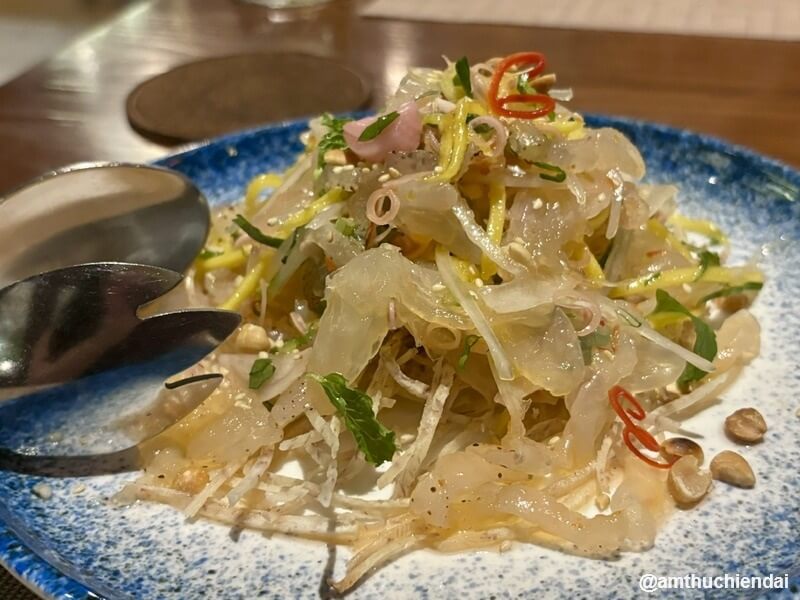
Your options open up even further if you just venture outside the “tourist comfort zone” by trying cháo (rice porridge), bún đậu mắm tôm (tofu and cold noodles served with a fermented shrimp sauce), or ngan (duck); you’ll end up eating surrounded by locals even in the most touristy area of the Old Quarter.
A last point I would like to make is that “street food” in Hanoi does not accurately represent what Hanoians eat at home. Family meals are usually centered around steamed rice accompanied by several dishes such as braised pork (or fish), sauteed water spinach, omelette…
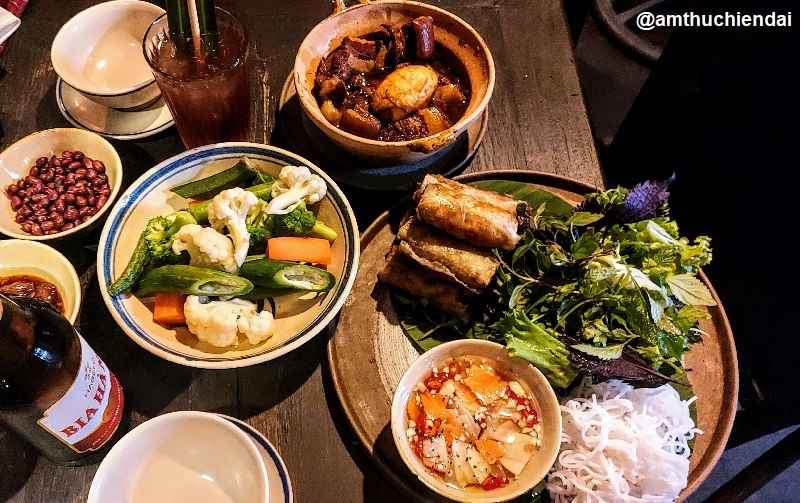
Tầm Vị restaurant represented this kind of cuisine well for me, but I have not been back since it was awarded one (very controversial) Michelin Star. If you want to avoid the queue and the tourists and enjoy a similar kind of meal, I would rather recommend you visit one of the Cơm Lệ branches.
3. Do not be obsessed with price and scams
Something else I have noticed over the years is that a lot of visitors seem to be obsessed with being overcharged or with scams.
They do exist: for example, be very suspicious of places recommended to you by your taxi driver. They often are earning retrocommission and will direct you to overpriced restaurants.
Besides that, my experience is that the vast majority of restaurant owners are honest, and so many complaints I have seen come from misunderstandings. Make sure to explain clearly what you order and check how much you are being charged at the end of the meal. Simply use Google Translate if something is unclear.
Also, please do not try to negotiate down the price of your food (it’s a big no!), and keep the amount in perspective by converting it into your own currency. Would you really make a scene for $0.50 or $1 at home, especially when the issue is either a misunderstanding or a genuine mistake?
And if you feel that some sellers are unfriendly, do not take it personally. Hanoi’s best-known street-food sellers are famous for their “colorful” personalities to the point that a dedicated expression, “Bún mắng, cháo chửi” has even been invented. It literally translates into “scolded when eating bún, cursed at when having cháo”.
4. Food safety : understand what the real problems are and where the risks are
Disclaimer: This topic is complicated, and I am not a health expert.
I see two points where tourist perception diverges from the reality I am experiencing as a local.
Food poisoning risks:
They are generally speaking overestimated. What you eat in the street and the ice you are served are not going to kill you.
Besides that, there is a big difference between feeling your stomach is weird, which is very frequent when travellers combine jet lag, lack of sleep, and exposure to entirely new foods and real food intoxication. So do not panic if your stomach struggles a bit with your first meal.
Using your common sense will also keep you away from the most riskiest situations:
- Do not go to eat in a completely empty place with a huge menu.
- If something feels or smells off, just avoid it.
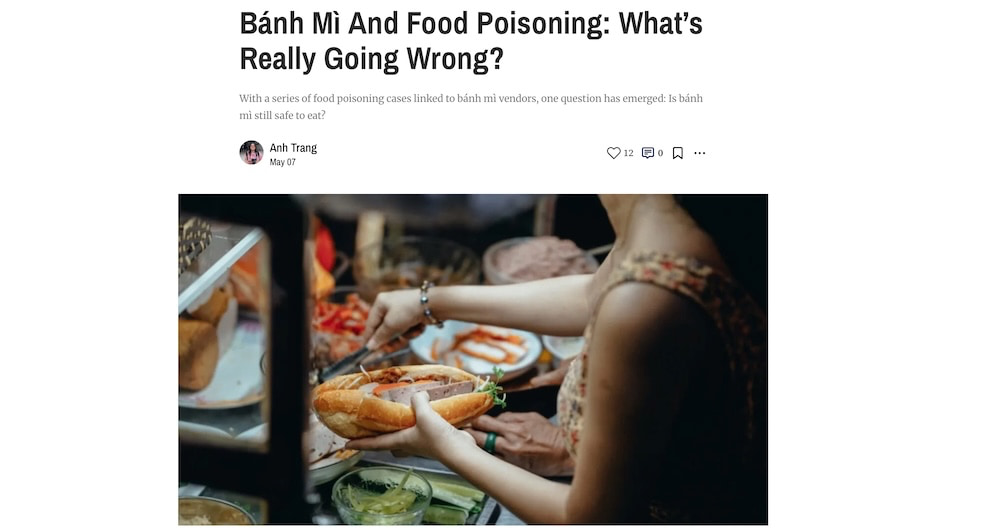
While everything I have just said is true, I would still single out Bánh mì as a special case. Among the few large-scale food poisonings reported by Vietnamese media, pretty much all of them involved this specific dish. Maybe keeping butter and paté sitting in a cart under the scorching heat for long hours is not great after all…
Long-term health considerations :
This is more complicated to cover, but I really want to talk about it as I am tired of seeing on social media stuff such as “Vietnam food is so natural” “Vietnamese diet has not yet been poisoned by big corporations”.
Thinking that Vietnamese farmers are still working as they did 50 years ago is a big misconception. One explanation for Vietnam’s exceptional growth over the past few decades is the massive increase in agricultural productivity, which allowed workers to leave the fields for factory jobs.
And yes, what I mean by that is the extensive use of fertilizers, pesticides, and the full range of industrial farming techniques.
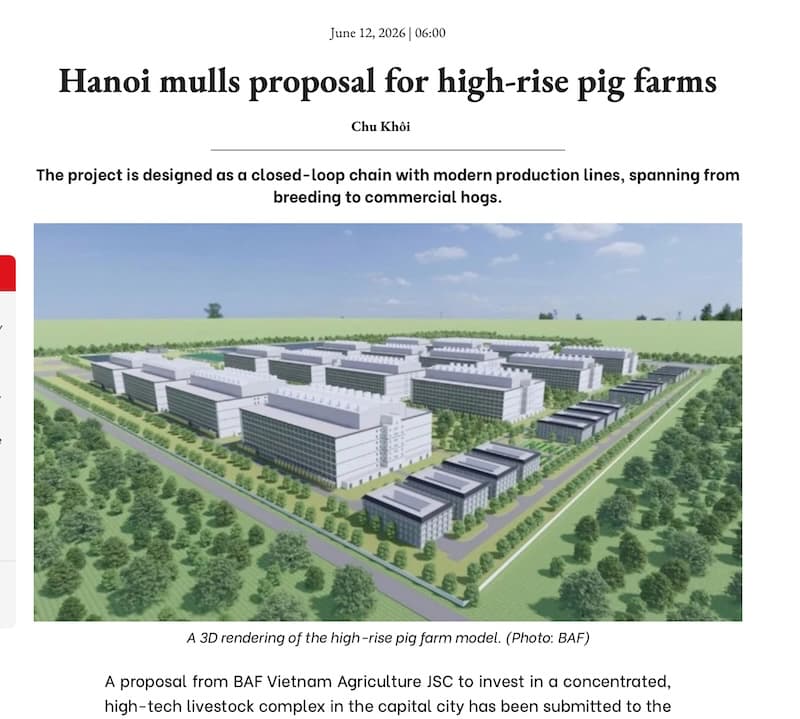
This transformation turned Vietnam into an agricultural giant, ranking among the world’s biggest exporters of coffee, seafood, and cashew. Unfortunately, regulations are still lagging behind Western countries, and I see regular news of agricultural shipments being rejected at the borders of Europe, Japan, or even China because their pesticide levels are just too high.
So, in short, do not be paranoid about food poisoning, but do not expect healthy, organic food during your stay in Hanoi.
5. Experiment with Vietnamese modern cuisine.
I do like street food, but the more time goes by, the more I get tired of seeing Vietnamese cuisine reduced to what is served in the street.
This completely ignores the efforts made by local chefs, often trained abroad in prestigious restaurants, to modernise an already rich culinary tradition.
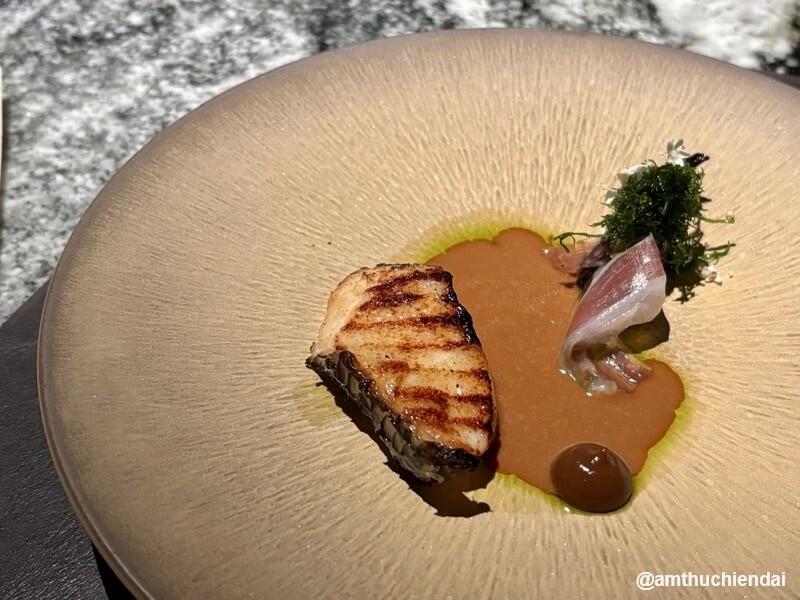
The Michelin Guide may have its flaws, but its arrival in Vietnam in 2023 really helped to recognize this new side of Vietnamese cuisine.
In Hanoi, I really do recommend you treat yourself at least once to a meal in a higher-end restaurant serving either Vietnamese or “fusion” food.
The city has seen plenty of openings recently, so even for me it can be hard to catch up.
But if you are looking more for a meal in a “bistro” setting, these two places that we have recently reviewed are a great starting point:
- ZAO – Vietnamese Rooted Eatery: fusion restaurant mixing Western and Vietnamese influences.
- MÀU Gastro Wine Bar: modern cuisine grounded in Vietnamese ingredients and flavors (located near the Temple of Literature).
For Vietnamese fine dining, the first name you are likely to hear is the one-star restaurant Gia. Unlike Tam Vi, the place offers a true multicourse experience in a refined setting. For transparency, I have to share that reception has been mixed among local foodies, and we have not yet tried the place.
A place we did try and that left me with a very strong impression is Chapter Dining. I consider it my first “true” experience of Vietnamese fine dining, and I’ve written a long, detailed review of it.
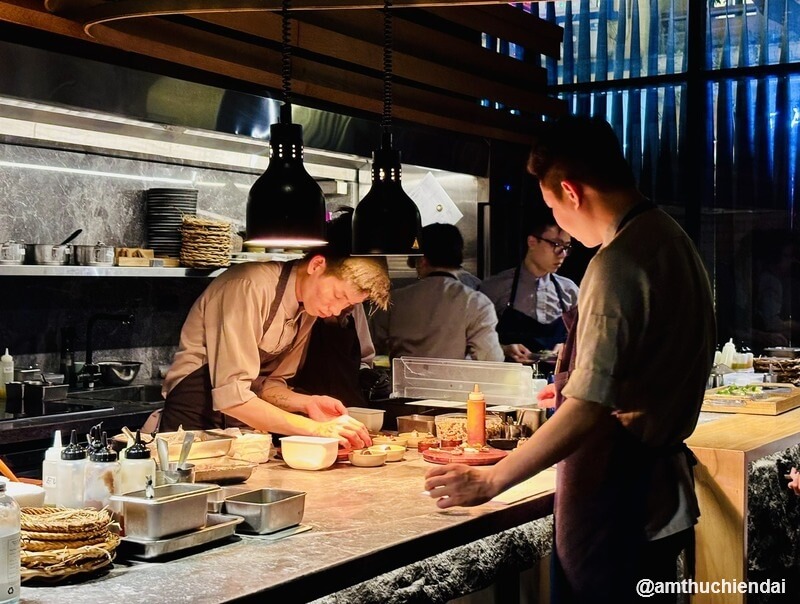
Just be aware that the menu I tried has changed since, but I do think that the core spirit remains.
Review: Chapter Dining & Grill – Vietnamese Contemporary Fine Dining
6. Go for a real Bia hơi experience
Even if the bia hơi experience has become pretty popular among tourists, I think people vastly underestimate how integral beer is to Vietnamese culture since it was introduced by the French in the late 19th century.
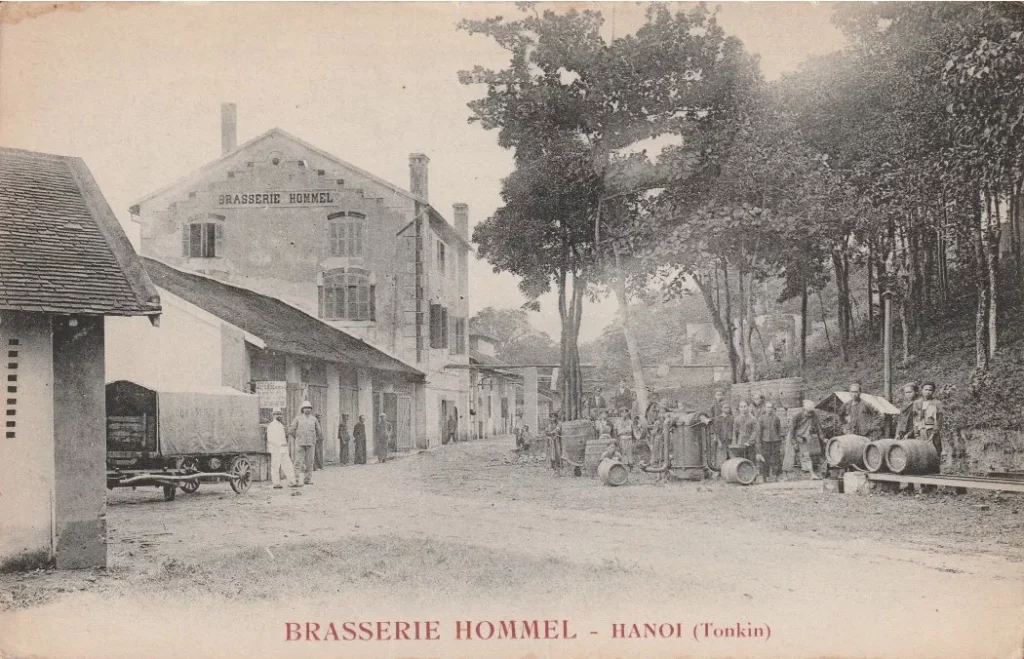
It’s a topic I am passionate about and could talk about for hours. If you share that interest, I invite you to have a look at the series of articles I wrote on the history of beer in Vietnam (4 articles). It’s, so far, the content I am most proud of since Hương and I started this website.
Read more: A History of Beer in Vietnam
On a more practical note, Hanoi has hundreds, if not more, “beer halls” that fit the “bia hơi” description, which makes it pointless to recommend specific names.
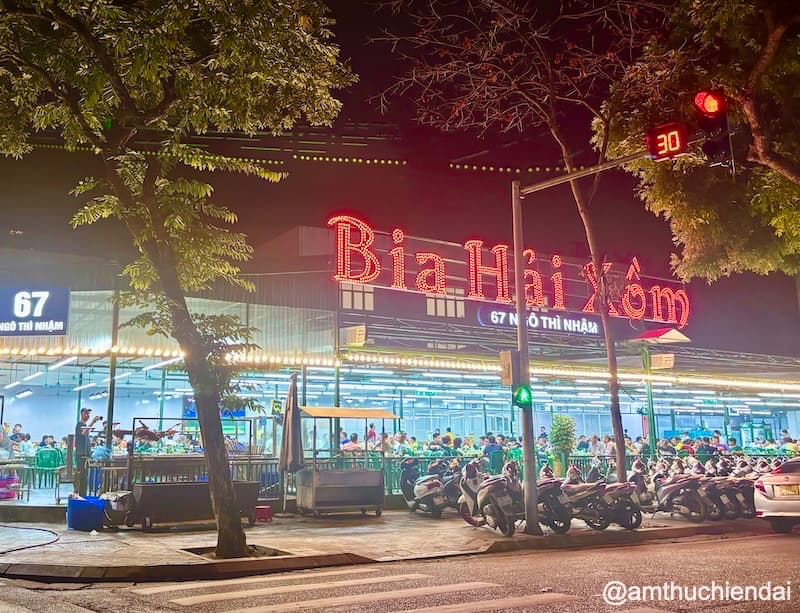
What you should know is:
- Choose a place that is big, packed with locals, and loud. This is part of the experience, and besides, an empty bia hơi is a very bad sign. Do not forget to order food as well, and do not be afraid to put ice in your beer; it’s totally part of the local traditions.
- Avoid the beer corner and Tạ Hiện Street. In my opinion, it is now just a tourist hub.
- Don’t worry about Google Reviews. Bia hơi owners do not really care about them (while most other restaurants do). They welcome hundreds of customers daily, and Vietnamese will only give a review when they encounter a problem.
- Look for the places prominently displaying the yellow Hanoi Beer signboard. Avoid the more modern-looking branded places such as Tự Do. They are part of big networks with multiple branches.
Regarding the beer served, most Bia hơi establishments will serve a draft version of Hanoi Beer brewed by Habeco. It’s a misconception to expect artisanal beers in a bia hơi.
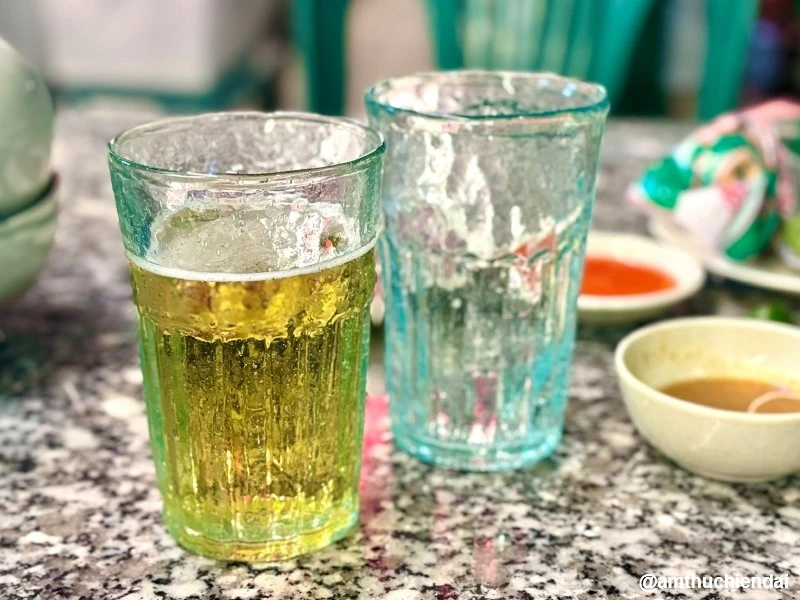
If you like craft beer, Hanoi is also a great place for that. Just avoid the countless places advertising craft beer in the northern part of the Old Quarter (Tony Vu and co…) and head to one of the venues recommended in my dedicated article. The craft beer scene in Vietnam is great with truly talented brewers who have been relentlessly experimenting with local ingredients and flavors.
Read More: Top 8 Venues for Craft Beer in Hanoi – Recommendation by a local
7. Comfort food : Make it an experience, not a walk of shame
Okay, let’s talk for real now. If you stay more than a few days in Hanoi, you’ll likely crave comfort food at some point. Yes, I am talking about pizza, burgers, and so on.
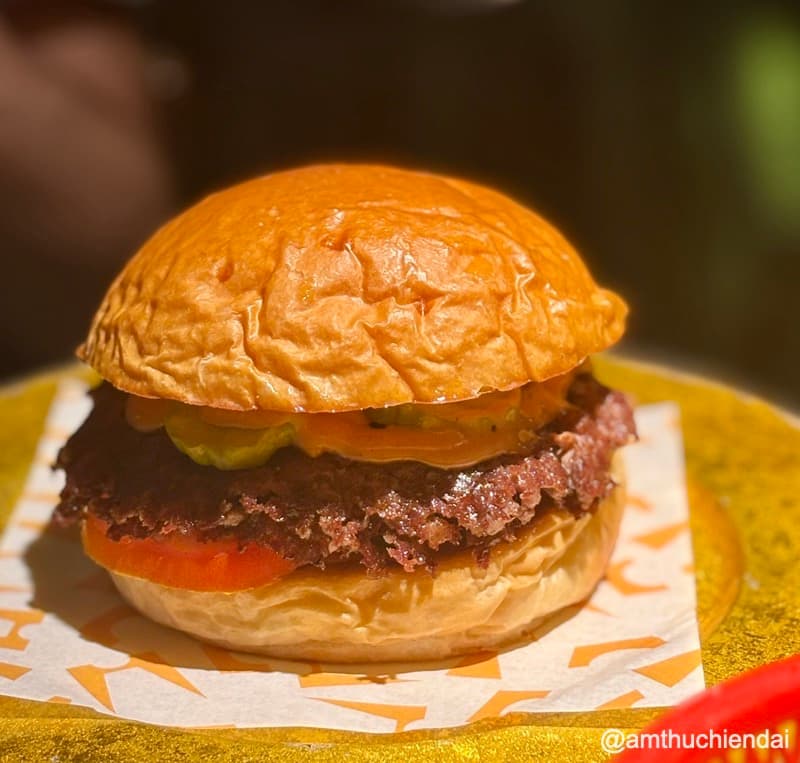
There is no shame in that. Just don’t support the big multinational companies that are already far too well represented in Vietnam.
You may have already heard of Pizza 4P’s, the Japanese-founded chain; it’s totally recommendable. We have been regularly eating there for years now. In the Old Quarter, Pizza Belga is also great.
I do not want to list all the great independently owned places offering Western comfort food here. My point is just that there are plenty of nice options in Hanoi that will more than satisfy you. On top of not giving your money to multinational corporations, you’ll often find that a lot of places have incorporated clever local twists into their menus.
For specific addresses, I invite you to have a look at these two articles. I am keeping them updated regularly:
Comfort food guides:
- Best Burgers In Hanoi : Our favorite places in Vietnam’s capital
- Best Pizzas in Hanoi – Restaurants We Have Tried and Liked
8. Give a try to the cocktail scene
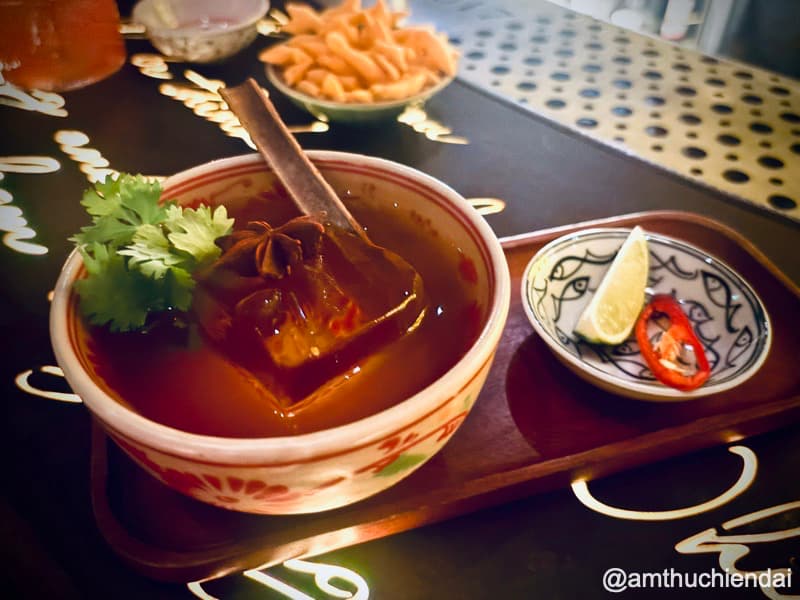
You might think this recommendation has nothing to do with food, but that’s just because you’ve never had a great Phở cocktail! This cocktail is a great example of how creative Vietnamese bartenders can be.
Huong’s a real cocktail fan, and we’ve visited a number of “famous” bars in Southeast Asia and Europe as a result. To be honest, the Hanoi cocktail scene is still one of our favourites, even after all the experiences we’ve had. I can explain that for a few reasons:
- Local bartenders are happy to use local ingredients and flavours in their creations.
- The scene is made up of mainly small independent bars, some of which also serve as coffee shops during the day.
- .The landscape is always changing. New openings and closures are happening all the time.
These bars are a great way to experience the vibe of Hanoi. If you want more detailed recommendations, we have wrote a good guide :
Hanoi’s Best Cocktail Bars: Recommendations from a Local
The Vietnam Food Letter
Enjoyed this? Get our next articles by email.
A personal letter with our new articles, openings worth a visit and what we've been reading.
Your email is used only to send this letter. Unsubscribe in one click.
